I still remember the first time I tried to make vegetable chips in my oven. I spent three hours slicing beets by hand, convinced my knife skills were sharp enough to pull it off. I was wrong. I pulled out a tray of charcoal—half burnt, half soggy, and entirely disappointing. I nearly swore off cooking right then and there. But that failure sparked a curiosity in me. I realized my mistake wasn’t just in the temperature; it was in the geometry.
If you want that perfect, store-bought crunch, you need consistency that human hands just can’t match. That’s where the mandoline settings for air fryer chips come into play. It turns your kitchen from a chaotic galley into a precise science lab. When I finally bought a mandoline and dialed it in, the difference was night and day. Suddenly, I wasn’t just baking potato slices; I was engineering the perfect snack.
In this guide, I’ll walk you through the exact mandoline settings for air fryer chips that I use to get that golden, shatter-crisp texture every single time. We will skip the disasters and go straight to the perfect bite.
Table of Contents
Dialing in the Perfect Mandoline Settings for Air Fryer Chips
You might think the air fryer does all the heavy lifting, but the battle for a crispy chip is actually won or lost on the cutting board. If your slices vary even by a millimeter, you end up with a bowl where some chips are bitter and black while others are limp and raw. To fix this, we need to talk about specific mandoline settings for air fryer chips.
The Sweet Spot: 1/16 vs. 1/8 Inch Settings
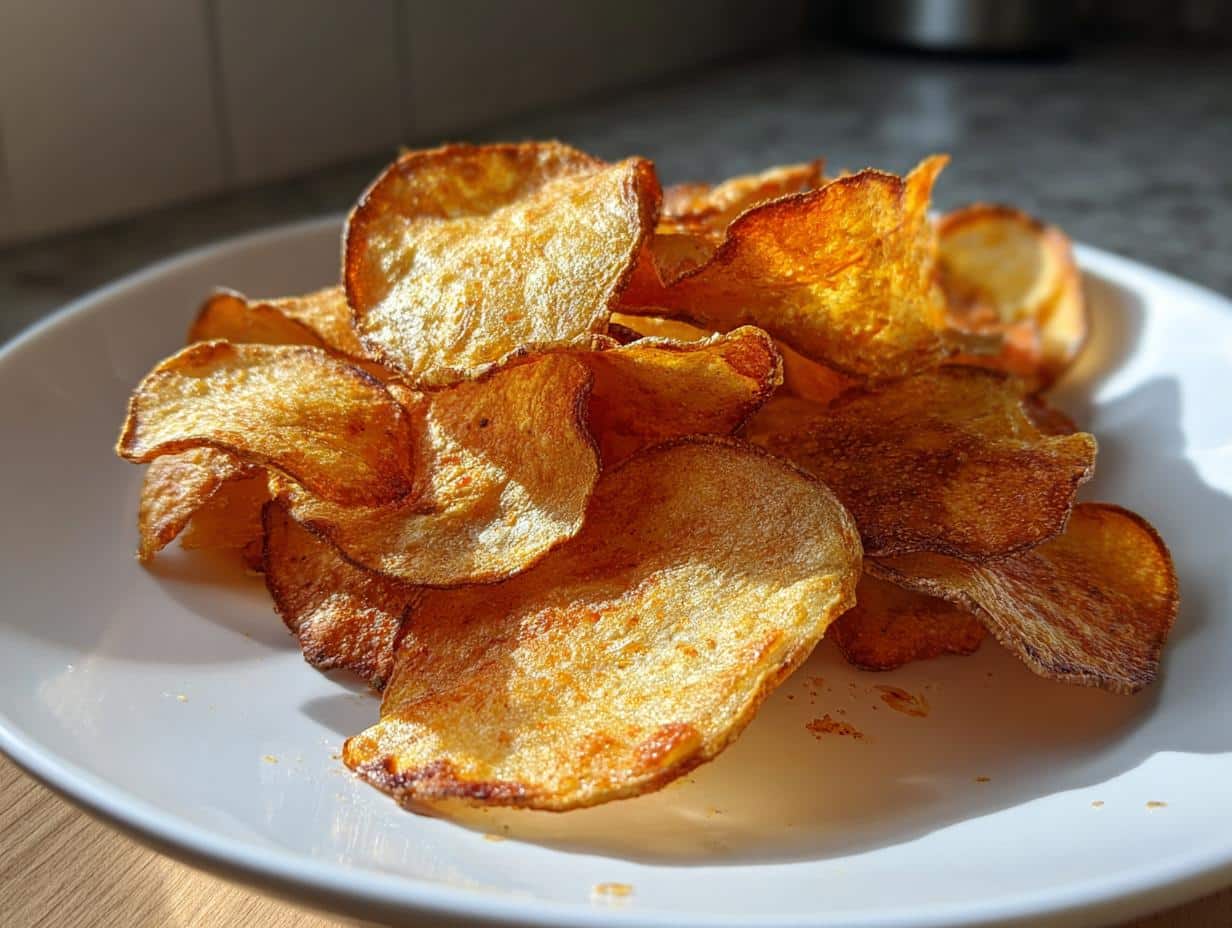
I have tested countless batches, and I can tell you that thickness determines the style of your chip. For that classic, translucent, “Lay’s-style” crunch, you must aim for 1/16 of an inch (approx. 1.5mm). This setting is often the lowest or second-lowest notch on a standard adjustable mandoline. At this thickness, the potato’s cell structure breaks down quickly in the heat, allowing moisture to evaporate before the sugars burn.
However, if you prefer a “Kettle-style” chip with a harder, heartier crunch, you should adjust your mandoline settings for air fryer chips to 1/8 of an inch (approx. 3mm). Be warned: this thickness requires a lower cooking temperature initially to dry out the center. Any thicker than 1/8 inch, and you are essentially making potato slices or scalloped potatoes, not chips. For the best air fryer crisps, stick to the 1/16-inch setting. It offers the highest success rate for beginners and delivers that addictive, airy texture we all crave.
Safety First: Handling the Blade Like a Pro
I treat my kitchen like a lab, and in any lab, safety protocols are non-negotiable. Mandolines are notoriously sharp—they have to be to slice starch cells so cleanly. Never try to be a hero and slice that last inch of potato by hand. Always use the hand guard that comes with your tool.
If your mandoline didn’t come with a guard, or if you find it clumsy, I highly recommend investing in a pair of cut-resistant gloves. They give you the tactile control you need to maintain a steady rhythm without the risk of injury. A consistent rhythm helps keep your pressure even, which ensures every slice maintains that critical 1/16-inch thickness. Once you master the safe use of your tool, you can slice a pound of potatoes in under two minutes, making this process faster than waiting for the oven to preheat.
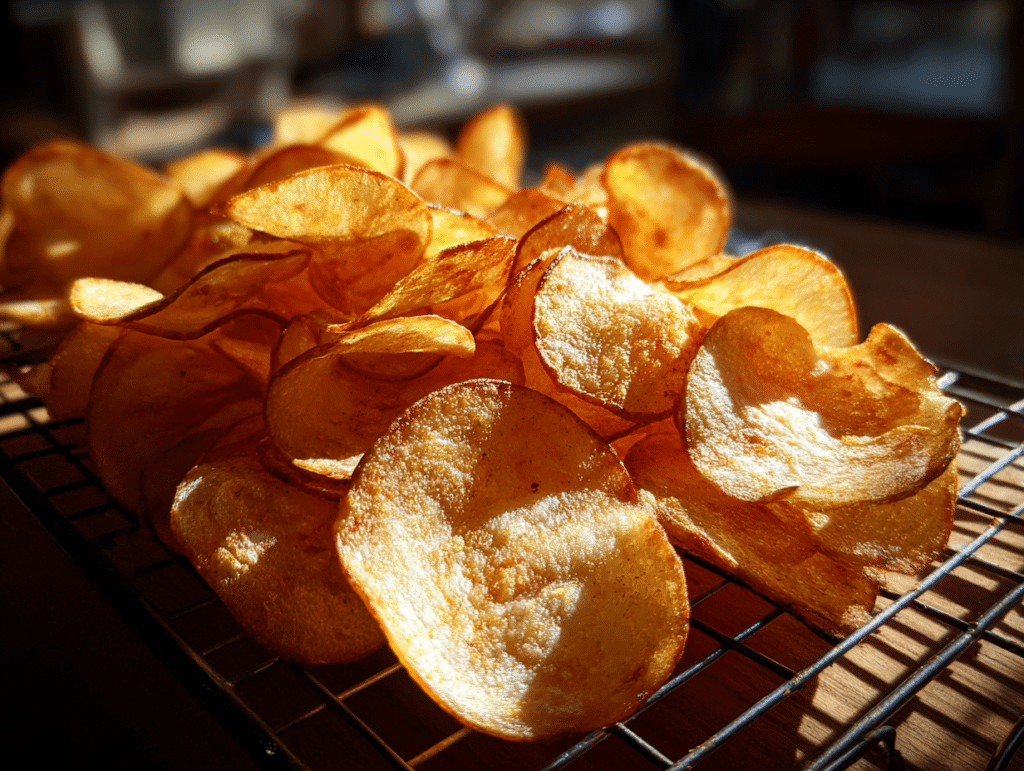
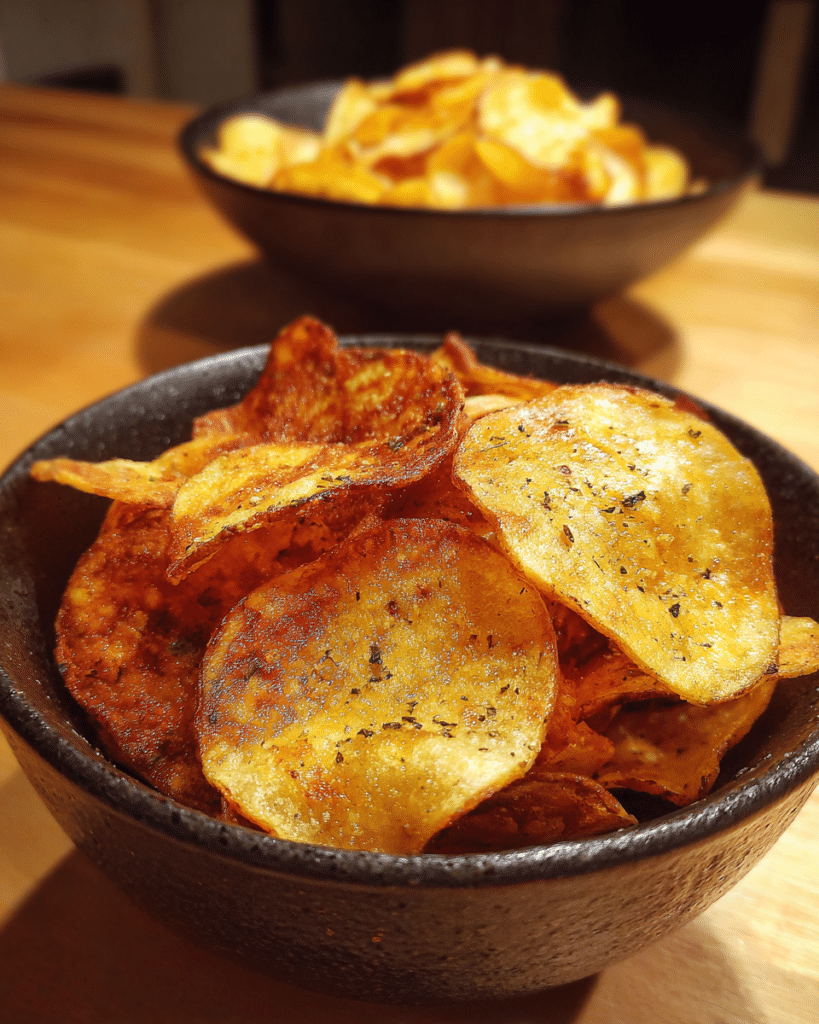
Midjourney Prompt for Featured Image: amateur photo with interesting details and texture from Reddit taken with iPhone 15 Pro that hooks users for a juicy, mouthwatering Air Fryer Potato Chips showing a pile of golden, translucent chips on a wire rack, sunlit kitchen counter background –s 100 –v 7 –ar 4:5
Internal Link Opportunity: If you love experimenting with crunch, check out our guide on seed and nut crunch for more texture-focused snacks.
Once you have secured those perfect, paper-thin rounds, you might feel tempted to toss them straight into the basket. Stop right there. Even with the precise mandoline settings for air fryer chips, skipping the prep work guarantees a soggy disaster. We need to treat the potato chemistry with as much respect as the cut itself.
Preparing Your Slices for the Air Fryer
The Starch Soak Strategy
Raw potatoes are packed with starch, which is actually sugar waiting to happen. If you cook them immediately, that starch burns dark brown before the chip has a chance to crisp up. To fix this, you must wash it away. Drop your beautiful, uniform slices into a large bowl of ice-cold water immediately after cutting.
Let them swim for at least 15 minutes. You will notice the water turning cloudy; that is the excess starch leaving the potato. If you are rushing, you might end up with burnt edges and raw centers. For the best results, change the water and rinse them again until the water runs clear. This step is non-negotiable if you want that professional-grade crunch. If you love experimenting with texture, this soaking method is the exact secret behind our best air fryer crisps.
Drying and Oil Distribution
Water is the enemy of hot oil, even in an air fryer. If your slices are wet, they will steam instead of fry, leaving you with limp potato circles. Remove the slices from the water and lay them out in a single layer on a clean kitchen towel or paper towels. Pat them completely bone-dry. You want to remove every droplet of surface moisture.
Next comes the oil. You do not need to drown them. Place the dry slices in a dry bowl and drizzle with about a tablespoon of neutral oil, like avocado or light olive oil. Toss them gently with your hands to coat every single slice evenly. Proper oil coverage conducts the heat better than air alone. This technique of moisture control is just as vital when preparing substantial oven fried mains, where a crispy exterior makes the dish.
Now that your slices are dry and oiled, the cooking process begins. Most people make the mistake of blasting the potatoes with high heat immediately. This approach burns the edges while leaving the center soggy. To avoid this, we use a specific thermal strategy that works in tandem with our precise slicing.
Executing the Two-Stage Air Fry Potato Chips Method
The Drying Phase (Low Temp)
Think of this first stage as a rapid dehydration process rather than frying. We need to drive the remaining moisture out of the potato without browning it yet. Set your air fryer to a lower temperature, around 300°F (150°C). Place the slices in the basket. Do not worry if they overlap slightly at this stage, as they will shrink.
Cook them for about 15 minutes. Every five minutes, pull the basket out and give it a vigorous shake. You want to separate any slices that are sticking together. By the end of this phase, the potatoes should look pale and feel leathery, not sticky. If you enjoy making dehydrated snacks, you will recognize this texture immediately. It creates the structural foundation for a sturdy chip.
The Crisping Phase (High Temp)
Now comes the magic. Increase the air fryer temperature to 400°F (200°C). This sudden jump in heat triggers the Maillard reaction, turning that pale starch into golden, flavorful crunch. This part happens fast.
Cook for another 3 to 5 minutes, but do not walk away. Open the basket every minute to toss the chips. You are looking for a golden-brown color and rigid texture. The difference between a perfect chip and a burnt one is often just thirty seconds at this temperature. This high-heat finish provides that satisfying snap, similar to the texture profile we aim for in our seed and nut crunch recipes. Once they hit that amber color, dump them onto a cooling rack immediately. They will continue to crisp up as they cool down.
Even with the correct mandoline settings for air fryer chips, things can go wrong if you ignore the variables inside the machine. Air fryers are essentially powerful convection ovens, and they punish overcrowding.
Fixing Common Air Fryer Chip Mistakes
Why Your Chips Are Soggy or Burnt
If your chips come out soft in the middle, you likely overcrowded the basket. The hot air needs to circulate around every single slice to wick away moisture. If the slices touch, they steam each other. For the crispest result, cook in small batches. It takes patience, but the result is worth it.
On the other hand, if your chips burn before they crisp, your temperature was too high too soon. This usually happens when cooks skip the low-temperature drying phase. Remember, sugar burns at 350°F (175°C). If the potato is still full of water when it hits that temperature, the edges will char while the center boils. Stick to the two-stage method I outlined. If you still struggle with uneven cooking, you might find our guide on oven fried mains helpful for understanding heat distribution.
Seasoning at the Right Moment
Flavor adhesion is a science. If you season raw potatoes, the salt draws out moisture, creating steam that prevents crisping. If you season cold chips, the spices fall right off. The golden window is the exact second they come out of the air fryer.
Dump the hot chips into a large metal bowl and immediately hit them with fine sea salt. The residual oil on the surface is still viscous, acting as a glue for the seasoning. Toss them vigorously. This is also the time to add delicate powders like vinegar powder or paprika, which would otherwise burn during the high-heat cooking phase. Mastering this timing is essential for any seasoned snack, including our popular seed and nut crunch mixes.
| Chip Style | Mandoline Setting | Texture Profile | Cooking Notes |
|---|---|---|---|
| Classic Crisp | 1/16 inch (1.5mm) | Light, airy, shatter-crisp | Cooks fast, high risk of burning |
| Kettle Style | 1/8 inch (3mm) | Hard crunch, sturdy | Requires longer drying phase |
| Rustic Slice | 3/16 inch (4.5mm) | Crispy edge, soft center | Not a true chip; treat as a side dish |
FAQ Section
What is the best potato for air fryer chips?
Russet potatoes are the gold standard. They have a high starch content and low moisture, which creates a fluffy interior and shattered-glass exterior. Yukon Golds work too, but they tend to be softer and darker due to higher sugar content.
Do I really need to soak the potatoes?
Yes. Soaking removes surface starch. If you skip this, the starch sugars brown too quickly, resulting in burnt, bitter chips that are still soft in the middle.
Can I store homemade air fryer chips?
You can, but humidity is the enemy. Store them in an airtight container or a vacuum-sealed jar at room temperature. They stay fresh for about 3-5 days. If they soften, pop them back in the air fryer at 300°F for 2 minutes to revive them.
Is using a mandoline dangerous?
It can be if you don’t respect the blade. Always use the hand guard or cut-resistant gloves. Never try to slice the last nub of the potato by hand; it’s not worth the risk.
Conclusion
Making the perfect chip isn’t magic; it is engineering. By locking in your mandoline settings for air fryer chips at exactly 1/16 of an inch and strictly following the two-stage cooking method, you remove the guesswork completely. You stop hoping for a good result and start manufacturing one.
So, grab a Russet, set up your station, and trust the process. Once you hear that first unmistakable crunch, you will never look at a bag of store-bought chips the same way again. If you need more visual inspiration or want to pin this guide for your next snack attack, visit us on Pinterest. I would love to see your golden creations there, so please share your best batch with the community.