You know those nights when you’re staring into the fridge wondering what to make for dinner? That was me every Wednesday until I discovered sheet pan flounder fillets – my lifesaver for crazy weeknights. It’s become my go-to when I want something delicious but don’t feel like dealing with a mountain of dishes. Just toss everything on one pan, pop it in the oven, and 20 minutes later you’ve got perfectly flaky fish with zero stress. The best part? My kids actually eat it without complaining (most of the time). If you’re looking for a meal that’s simple, healthy, and cleanup-friendly, you’re gonna love this recipe as much as I do.
Table of Contents
Why You’ll Love These Sheet Pan Flounder Fillets
Listen, I’m not exaggerating when I say this recipe changed my weeknight dinner game completely. Here’s why it’ll become your new favorite too:
- Dinner ready in 20 minutes – from fridge to table faster than takeout
- One pan = zero stress – toss the parchment and you’re done cleaning
- Healthier than fried fish – all that delicious flavor with way less oil
- Customizable seasonings – jazz it up or keep it simple depending on your mood
Effortless Cooking with Maximum Flavor
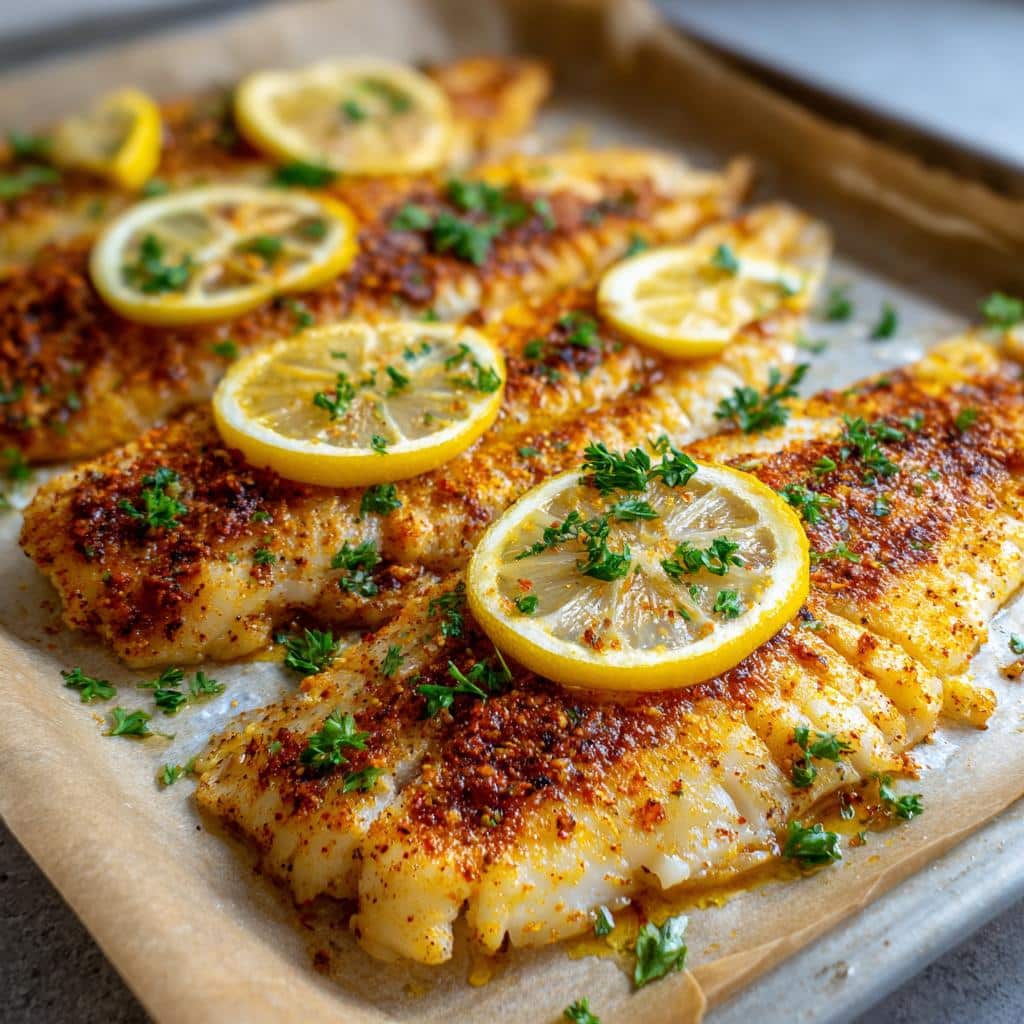
What still blows my mind is how something this easy tastes so darn good. The sheet pan method somehow makes the flounder even more tender and lets the seasonings really shine. That garlic and paprika crust? Chef’s kiss And those lemon slices caramelize just enough to give every bite this bright, citrusy pop. Trust me, you’ll feel like you pulled off some fancy restaurant trick when really you just tossed everything on a pan.
Ingredients for Sheet Pan Flounder Fillets
Okay, let’s talk ingredients – and I promise you won’t need to make a special grocery run for this. Everything here is probably already in your kitchen (except maybe the fresh flounder, but even that’s easy to find). Here’s what you’ll need to make magic happen:
- 4 flounder fillets (6 oz each) – look for ones that are nice and firm, not mushy
- 2 tbsp olive oil – the good stuff, not that mystery oil in the back of your cabinet
- 1 tsp salt – I use kosher, but whatever you’ve got works (just taste as you go)
- 1/2 tsp black pepper – freshly cracked if you’re feeling fancy
- 1 tsp garlic powder – my secret weapon for quick flavor
- 1 tsp paprika – gives that gorgeous golden color
- 1 lemon, sliced – thin slices work best for laying on top
- 2 tbsp fresh parsley, chopped – trust me, the fresh stuff makes all the difference here
See? Nothing crazy. The beauty of this recipe is how these simple ingredients come together to make something that tastes way more impressive than the sum of its parts. Pro tip: if your flounder fillets are thicker than 1/2 inch, you might want to grab an extra lemon – we’ll use those slices to keep them moist while baking.
How to Make Sheet Pan Flounder Fillets
Alright, let’s get cooking. I promise this is so easy you could do it half-asleep (and believe me, I have). Here’s the step-by-step that’ll have dinner on the table before you know it.
Prepping the Flounder
First things first – grab that sheet pan and line it with parchment paper. No parchment? No problem. Just give the pan a quick spray with oil. Now lay out your flounder fillets like they’re sunbathing – give them some space so they cook evenly. Drizzle that beautiful olive oil over them (don’t be shy) and use your fingers to rub it all over. This is where the magic starts.
Next comes the flavor party. Sprinkle that salt, pepper, garlic powder, and paprika evenly over each fillet. I like to do one side first, then gently flip them to get the other side. Don’t worry about perfection – just make sure each piece gets some love. Finally, place those lemon slices right on top like little flavor hats. They’ll keep the fish moist and infuse every bite with citrusy goodness.
Baking to Perfection
Pop that pan into your preheated 400°F oven and set your timer for 12 minutes. Now, here’s my little secret – oven temperatures can vary, so start checking at 12 minutes even if your timer says 15. You’ll know it’s done when the fish flakes easily with a fork (just gently poke the thickest part). The edges should be just starting to turn golden, and your kitchen will smell like a seaside bistro.
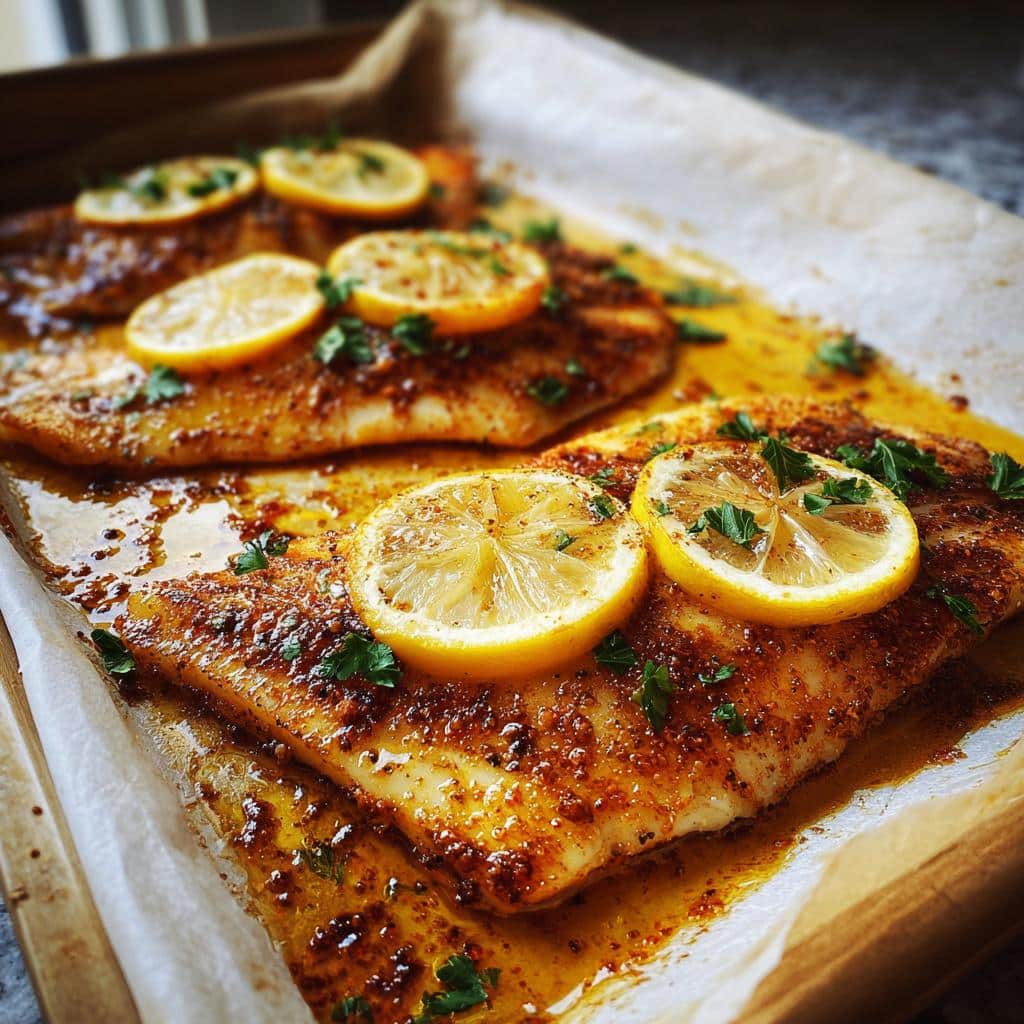
When it’s perfectly cooked, pull it out and immediately sprinkle with that fresh parsley. The heat will wake up all those herbal flavors. And whatever you do, don’t skip the parsley – it’s like the exclamation point at the end of a delicious sentence.
Pro tip: If some fillets are thicker than others, just pull the thinner ones out a minute or two early. No one likes overcooked fish, and this way everything comes out perfect together.
Tips for Perfect Sheet Pan Flounder Fillets
After making this recipe more times than I can count (seriously, my family requests it weekly), I’ve picked up some tricks that take it from good to “wow, did you really make this?” Here are my can’t-live-without tips:
- Pat those fillets dry – Use paper towels to gently blot them before seasoning. Wet fish steams instead of getting that beautiful golden crust we want.
- Fresh lemon is non-negotiable – That bottled stuff just won’t give you the same bright flavor. Plus, thin slices caramelize beautifully on top.
- Give them space to breathe – Overcrowding the pan makes everything steam instead of bake. If fillets are touching, use two pans or bake in batches.
- Check early, check often – Flounder cooks FAST. Start checking at 10 minutes if your oven runs hot (like mine does). Better underdone than over.
- Let it rest a minute – I know it’s tempting to dig right in, but waiting 2-3 minutes after baking lets juices redistribute for maximum tenderness.
One last pro tip from my many kitchen experiments: if you’re doubling the recipe, rotate your pans halfway through baking. Ovens have hot spots, and this ensures everything cooks evenly. Trust me, your future self will thank you when every bite is perfection.
Serving Suggestions for Sheet Pan Flounder Fillets
Now comes the fun part – plating up your gorgeous flounder. I love how versatile this dish is – dress it up for company or keep it simple for weeknights. Here are my favorite ways to serve it:
The Classic Combo: Pair your flounder with some steamed asparagus or green beans and a scoop of lemon rice. The bright flavors complement each other perfectly, and it looks fancy enough for guests (shhh, no one needs to know how easy it was).
Salad Lover’s Dream: Flake the warm fish over a big bed of mixed greens with cherry tomatoes, cucumber, and a light vinaigrette. The contrast of warm fish and cool crisp veggies? Absolute perfection.
Mediterranean Twist: Serve with roasted cherry tomatoes, kalamata olives, and a dollop of tzatziki sauce. Sprinkle with extra parsley and crumbled feta if you’re feeling extra.
Quick & Easy: When I’m really pressed for time, I’ll just throw some frozen veggie mix on the pan during the last 5 minutes of baking. One-pan wonder.
Don’t forget that final flourish of fresh parsley right before serving – it adds such a pop of color and freshness. And here’s my little secret: I always keep extra lemon wedges on the side because my family loves squeezing extra juice over their portions. The acidity really makes all the flavors sing.
Storing and Reheating Sheet Pan Flounder Fillets
Okay, let’s be real – this flounder is so good it usually doesn’t last long enough to store. But on the rare chance you’ve got leftovers (or you’re meal prepping like a boss), here’s how to keep them tasting fresh and delicious.
Storing: First, let the fish cool completely – but don’t leave it out more than 2 hours. Then transfer to an airtight container with a piece of parchment between layers if stacking. They’ll keep in the fridge for up to 2 days, though honestly, they’re best eaten the next day. The lemon flavor actually gets better overnight.
Reheating: Now listen carefully – the microwave is NOT your friend here unless you like rubbery fish. Instead, pop those fillets on a baking sheet and warm them in a 300°F oven for about 5 minutes. Want them crispy again? Broil for the last minute. If you absolutely must microwave, do it at 50% power in 30-second bursts with a damp paper towel on top.
One important warning – whatever you do, don’t overheat. Flounder reheats FAST, and one minute too long can ruin that perfect texture we worked so hard for. When in doubt, underheat and check often. Your patience will be rewarded with tender, flaky fish that tastes almost as good as fresh from the oven.
Sheet Pan Flounder Fillets Variations
Okay, here’s where the fun really starts. Once you’ve mastered the basic recipe (and trust me, you’ll have it memorized after a few tries), it’s time to play with some delicious variations. I’ve tested all of these, and each one brings something special to the table – literally.
Veggie-Packed Version: Toss some halved cherry tomatoes and thin asparagus spears right on the pan with the fish during the last 8 minutes of baking. The tomatoes burst and create this incredible pan sauce that’s to die for.
Spice It Up: Swap the paprika for cayenne if you like a little heat (start with 1/4 tsp and adjust). Sometimes I’ll add a pinch of crushed red pepper flakes too – just enough to make your taste buds sing.
Herb Garden Special: Mix chopped fresh dill and thyme with the parsley for an herby explosion. This one’s perfect for summer when my herb garden is going crazy.
Crispy Topping Twist: Right before baking, sprinkle with panko breadcrumbs mixed with a bit of melted butter and lemon zest. It gives the most delicious golden crust. If you love crispy toppings, check out my recipe for crispy panko fish fillets for another crunchy idea.
The beauty of sheet pan cooking? You can get creative without making a huge mess. Just remember – if you’re adding extra ingredients, keep an eye on cook times. Veggies might need a head start, and toppings should be added at the right moment. Have fun with it, and don’t be afraid to make it your own.
Sheet Pan Flounder Fillets FAQs
I get asked about this recipe all the time – seems like everyone wants to make sure they’re doing it right. Here are answers to the questions that pop up most often in my kitchen (and my DMs):
Can I use frozen flounder fillets?
Absolutely, Just thaw them completely in the fridge overnight first, and pat them extra dry with paper towels. Frozen fish tends to release more moisture, so you might need an extra minute or two of baking time. Pro tip: Lay them on a wire rack over a baking sheet for 30 minutes before cooking to help remove excess water.
How do I prevent the fish from sticking to the pan?
Two words: parchment paper. It’s my kitchen lifesaver. If you’re out, aluminum foil brushed with oil works too. The key is making sure your pan is properly lined before adding the fish. And don’t try to move the fillets too soon after baking – let them rest a minute so they release naturally.
What if my fillets are different thicknesses?
No worries – just tuck the thinner ends under to create more even pieces. Or do what I do: put the thicker fillets in the center of the pan where it’s hottest, and pull the thinner ones out a couple minutes early. Your oven’s your friend here – use its hot spots to your advantage.
Can I make this with other types of fish?
You bet, This method works great with tilapia, cod, or even salmon (though you’ll need to adjust the cooking time). Just remember – thinner fillets cook faster, thicker ones need more time. The flakiness test never lies – when it easily separates with a fork, it’s done.
Why does my fish sometimes come out dry?
Oh honey, we’ve all been there. Usually it’s one of three things: oven’s too hot (try lowering to 375°F), cooked too long (set that timer), or the fillets were too thin to begin with. Next time, try basting with a little extra olive oil halfway through cooking. And those lemon slices? They’re not just for looks – they’re moisture magic. For more general tips on preventing food from drying out during cooking, check out this guide on how to cook fish perfectly.
Nutritional Information
Before we dive into the numbers, let me be real with you – I’m no nutrition lab, and your exact counts might vary depending on your specific ingredients. But here’s the general nutritional scoop per serving (that’s one beautiful 6 oz flounder fillet with all the fixings):
- Calories: 220 (light enough for seconds if you ask me)
- Protein: 30g – hello, muscle fuel.
- Fat: 10g (only 2g saturated – the good fats from that olive oil)
- Carbs: 2g (basically nothing – perfect if you’re watching those)
- Sugar: 0g (naturally sweet from the fish and lemon)
- Sodium: 600mg (you can reduce this by cutting back on salt if needed)
Now here’s my two cents – while the numbers are nice to know, what really matters is that you’re eating real, whole ingredients. You’re getting high-quality protein, heart-healthy fats from the olive oil, and zero weird additives. That’s what I call a win-win dinner. Pro tip: If you’re tracking macros closely, remember that extra lemon squeeze or parsley garnish might add a tiny bit more, but we’re talking negligible amounts here. For more information on the health benefits of lean fish like flounder, you can look into resources from organizations like the FDA.
Rate This Recipe
Alright, let’s be honest – I want to hear how your sheet pan flounder turned out. Did your family gobble it up like mine always does? Maybe you put your own spin on it with some extra herbs or spices? Drop a star rating below and tell me all about your experience in the comments – the good, the bad, and the “oh my gosh I can’t believe this was so easy”.
And hey, if you snapped a photo of your beautiful creation (that golden crust deserves its close-up), tag me on Pinterest @crispzyrecipes. There’s nothing I love more than seeing your kitchen wins. Whether this was your first time cooking flounder or your hundredth, your feedback helps me create even better recipes for you. Now go enjoy that delicious fish – you’ve earned it.
Print20-Minute Sheet Pan Flounder Fillets That Wow Every Time

A simple and delicious way to cook flounder fillets on a sheet pan with minimal cleanup.
- Prep Time: 5 minutes
- Cook Time: 15 minutes
- Total Time: 20 minutes
- Yield: 4 servings
- Category: Main Dish
- Method: Baking
- Cuisine: American
- Diet: Low Calorie
Ingredients
- 4 flounder fillets (6 oz each)
- 2 tbsp olive oil
- 1 tsp salt
- 1/2 tsp black pepper
- 1 tsp garlic powder
- 1 tsp paprika
- 1 lemon, sliced
- 2 tbsp fresh parsley, chopped
Instructions
- Preheat oven to 400°F.
- Place flounder fillets on a sheet pan lined with parchment paper.
- Drizzle olive oil over the fillets.
- Sprinkle salt, pepper, garlic powder, and paprika evenly.
- Top with lemon slices.
- Bake for 12-15 minutes until the fish flakes easily.
- Garnish with fresh parsley before serving.
Notes
- Use fresh flounder for best results.
- Adjust seasoning to your taste.
- Serve with steamed vegetables or rice.