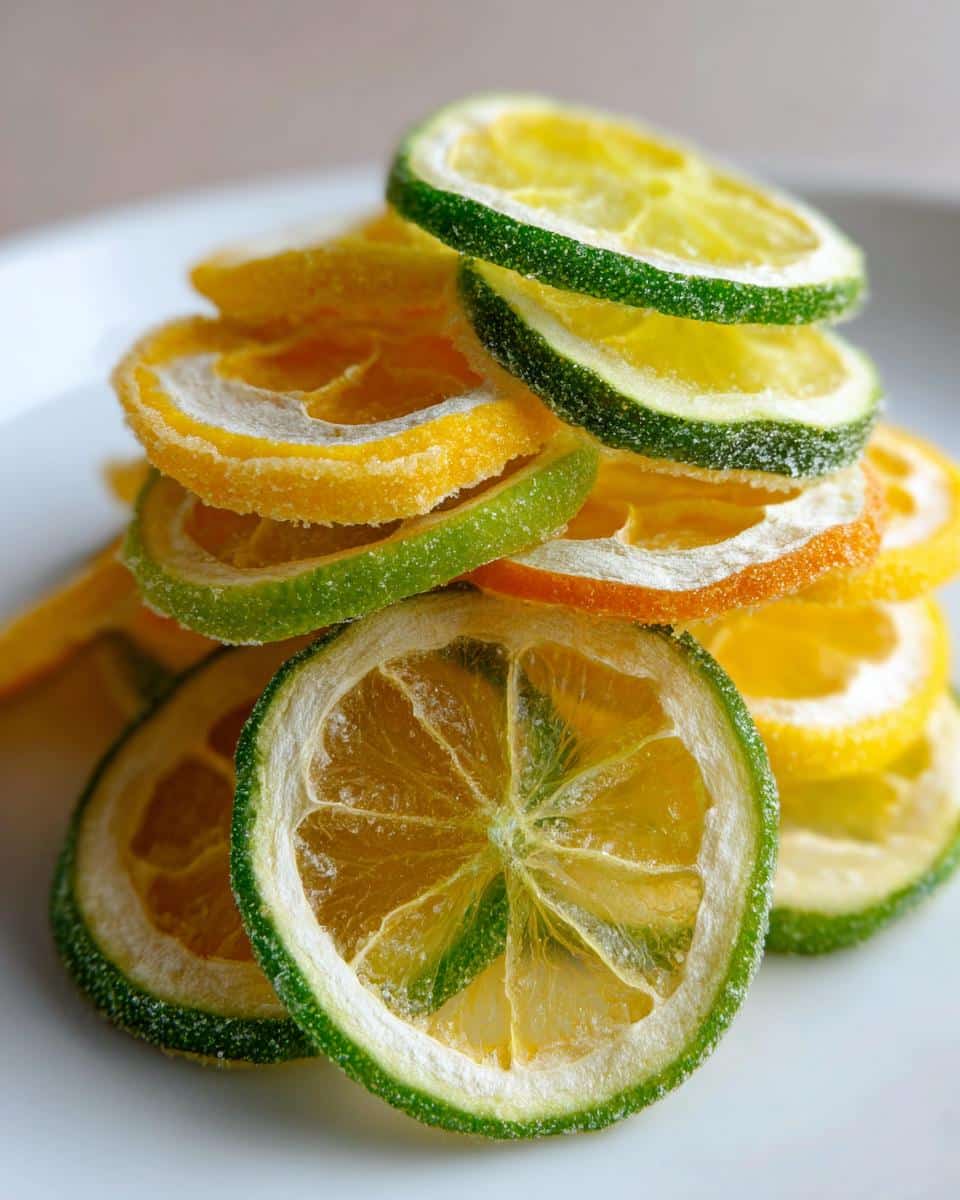
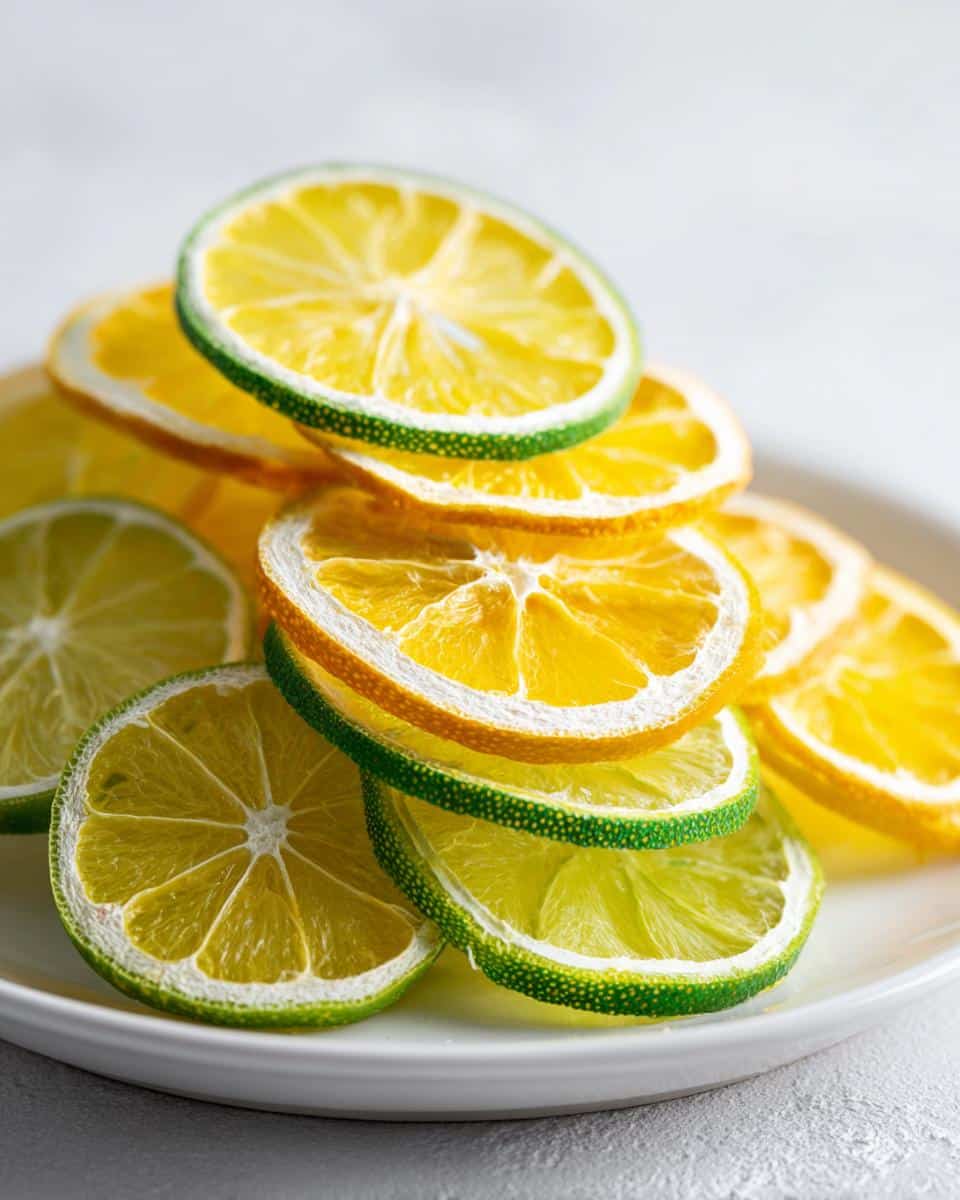
You know that moment when you take your first sip of a perfectly crafted cocktail and the garnish just makes it? That’s the magic of dehydrated lemon & lime wheels. I swear by them—little bursts of citrusy sunshine that not only look stunning but pack a punch of flavor too. The first time I tried making them at home, I couldn’t believe how easy it was. Now, my bar cart is never without a jar of these golden (and green) gems. Whether you’re sprucing up a gin & tonic or adding flair to a mocktail, these wheels are your ticket to next-level drinks. Trust me, once you start dehydrating your own citrus, you’ll never go back to sad, floppy slices again.
Table of Contents
Why You’ll Love These Dehydrated Lemon & Lime Wheels
Let me count the ways these little citrus gems will become your new obsession:
- Effortless elegance: Three simple steps (slice, dehydrate, store) transform basic fruit into bartender-worthy garnishes
- Pantry power: They’ll keep for months in your cupboard – no last-minute grocery runs for fresh citrus
- Flavor boosters: That satisfying “snap” releases concentrated citrus oils that fresh slices just can’t match
- Instant glam: Even basic drinks look Instagram-ready with these golden wheels perched on the rim
I promise – once you try them, you’ll be dehydrating citrus like it’s going out of style.
Ingredients for Dehydrated Lemon & Lime Wheels
You’ll need just two things to make these citrusy stars – and I bet you already have them in your fruit bowl right now, Grab:
- 2 lemons (washed and dried thoroughly – no shortcuts here)
- 2 limes (equally squeaky clean and dry)
That’s it, Though I won’t judge if you want to experiment with oranges or grapefruits next time – the citrus world is your oyster.
Equipment You’ll Need
Don’t worry—you don’t need fancy gadgets to make these citrus wheels shine. Just grab:
- A mandoline (for those paper-thin, even slices—watch your fingers)
- A dehydrator (or your oven on its lowest setting in a pinch)
- An airtight container (mason jars work perfectly for that rustic-chic look)
That’s seriously all you need to turn fresh citrus into cocktail magic.
How to Make Dehydrated Lemon & Lime Wheels
Alright, let me walk you through my foolproof method for making these citrus wonders. I’ve made enough batches now that I could probably do it in my sleep, but I’ll share all the little tricks I’ve learned along the way.
Step 1: Prepare the Citrus
First things first – give those lemons and limes a good scrub under warm water. I like to use a soft brush to really get into the nooks and crannies. You’d be surprised how much wax and gunk can hide on citrus skin. After washing, dry them completely with a clean towel. Any leftover moisture can lead to mold during dehydration – and nobody wants fuzzy garnishes in their cocktail.
Step 2: Slice Evenly
Now for my favorite part – slicing. Break out that mandoline (careful, those blades are sharp) and slice your citrus into wheels about 1/8-inch thick. Too thin and they’ll burn; too thick and they’ll take forever to dry. Pro tip: If you don’t have a mandoline, a very sharp knife works too – just take your time to keep the slices uniform.
Step 3: Arrange on Dehydrator Trays
Lay your beautiful citrus wheels in a single layer on the dehydrator trays. No overlapping allowed – we want every slice to get equal drying love. I usually fit about 12-15 wheels per tray depending on their size. The slices can be close, but they shouldn’t be touching or you’ll end up with sticky spots that don’t dry properly.
Step 4: Dehydrate
Set your dehydrator to 135°F (57°C) and let it work its magic for 6-8 hours. I like to check after about 5 hours – the exact time will depend on your dehydrator and the thickness of your slices. They’re done when they’re completely dry and brittle – test by bending a slice; it should snap cleanly, not bend. The edges might curl up a bit, which I think gives them extra character.
Step 5: Store Properly
Once completely cooled, transfer your dehydrated wheels to an airtight container. A mason jar with a tight lid works perfectly and looks adorable on your bar cart. Store them in a cool, dry place away from sunlight. If you notice any moisture building up in the jar, pop them back in the dehydrator for another hour or so – we want them bone dry.
Tips for Perfect Dehydrated Lemon & Lime Wheels
Want pro-level results every time? Here’s my secret sauce:
- Go organic: Non-treated citrus skins taste better and won’t have that weird wax coating
- Rotate trays: Switch top and bottom trays halfway through for even drying – trust me, it makes a difference.
- Test doneness: The “snap test” never lies – if it bends, it needs more time
- Patience pays: Don’t rush the drying process – properly dehydrated wheels last months
Follow these simple tricks and you’ll be the citrus dehydrating champion of your friend group.
How to Use Dehydrated Lemon & Lime Wheels
Oh, the possibilities. These little citrus gems aren’t just for cocktails (though they do make a mean gin & tonic look fancy). Try crumbling them over vanilla ice cream for a zesty surprise, or steep a wheel in hot tea – instant citrus infusion. My favorite trick? Tossing them into homemade granola before baking for bright, tangy bursts. They even make adorable cake toppers when you’re feeling extra. Basically, anywhere you’d use fresh citrus zest or peel, these dehydrated beauties can shine – with ten times the shelf life.
Storing Dehydrated Lemon & Lime Wheels
Here’s the beautiful part – these citrus wheels practically store themselves. Just tuck them into an airtight container (I’m partial to mason jars for their charm), keep them in a cool, dark spot, and they’ll stay crisp and vibrant for up to 6 months. The key is making absolutely sure they’re completely dry before storing – any lingering moisture is the enemy. I like to give mine a quick check every few weeks, just to be safe. When stored right, you’ll always have cocktail-ready citrus at your fingertips.
Nutritional Information
Now, don’t go thinking these citrus wheels are anything but good for you. Each little wheel packs about 2 calories with just a whisper of sugar (0.2g) and carbs (0.5g). Keep in mind these are estimates – your actual amounts might dance around a bit depending on how juicy your citrus was. But really, at these numbers, you can garnish guilt-free all night long.
Frequently Asked Questions
I get asked about these citrus wheels all the time – here are the questions that pop up most often:
Can I use my oven instead of a dehydrator?
Absolutely, Set your oven to its lowest temperature (usually around 170°F), prop the door open slightly with a wooden spoon, and bake for 2-3 hours. Just check them often – ovens can be unpredictable.
How do I know if they’ve gone bad?
If they lose their snap and get bendy or develop any fuzz, toss ’em. But stored properly, they’ll stay crisp for months.
Can I use other citrus fruits?
Oh honey, the world’s your oyster. Oranges, grapefruits, even kumquats work beautifully. Just adjust drying times for thicker peels.
Do I need to peel them first?
Nope, The skin holds all those gorgeous citrus oils that make your drinks pop. Just wash thoroughly and slice away.
Share Your Experience
Did you make these citrus wheels? I’d love to see your creations. Snap a pic of your garnished drinks and tag me – let’s spread the dehydrated citrus love together.
Print3 Simple Steps to Perfect Dehydrated Lemon & Lime Wheels

Dehydrated lemon and lime wheels are perfect for garnishing cocktails, adding a burst of citrus flavor and visual appeal.
- Prep Time: 10 mins
- Cook Time: 6-8 hours
- Total Time: 6-8 hours 10 mins
- Yield: 20-24 wheels
- Category: Garnish
- Method: Dehydrating
- Cuisine: International
- Diet: Vegan
Ingredients
- 2 lemons
- 2 limes
Instructions
- Wash and dry the lemons and limes thoroughly.
- Slice them into thin, even wheels.
- Arrange the slices on a dehydrator tray in a single layer.
- Dehydrate at 135°F (57°C) for 6-8 hours or until completely dry.
- Store in an airtight container until ready to use.
Notes
- Use a mandoline for even slices.
- Check for dryness by bending a slice—it should snap, not bend.
- Store away from moisture to prevent softening.