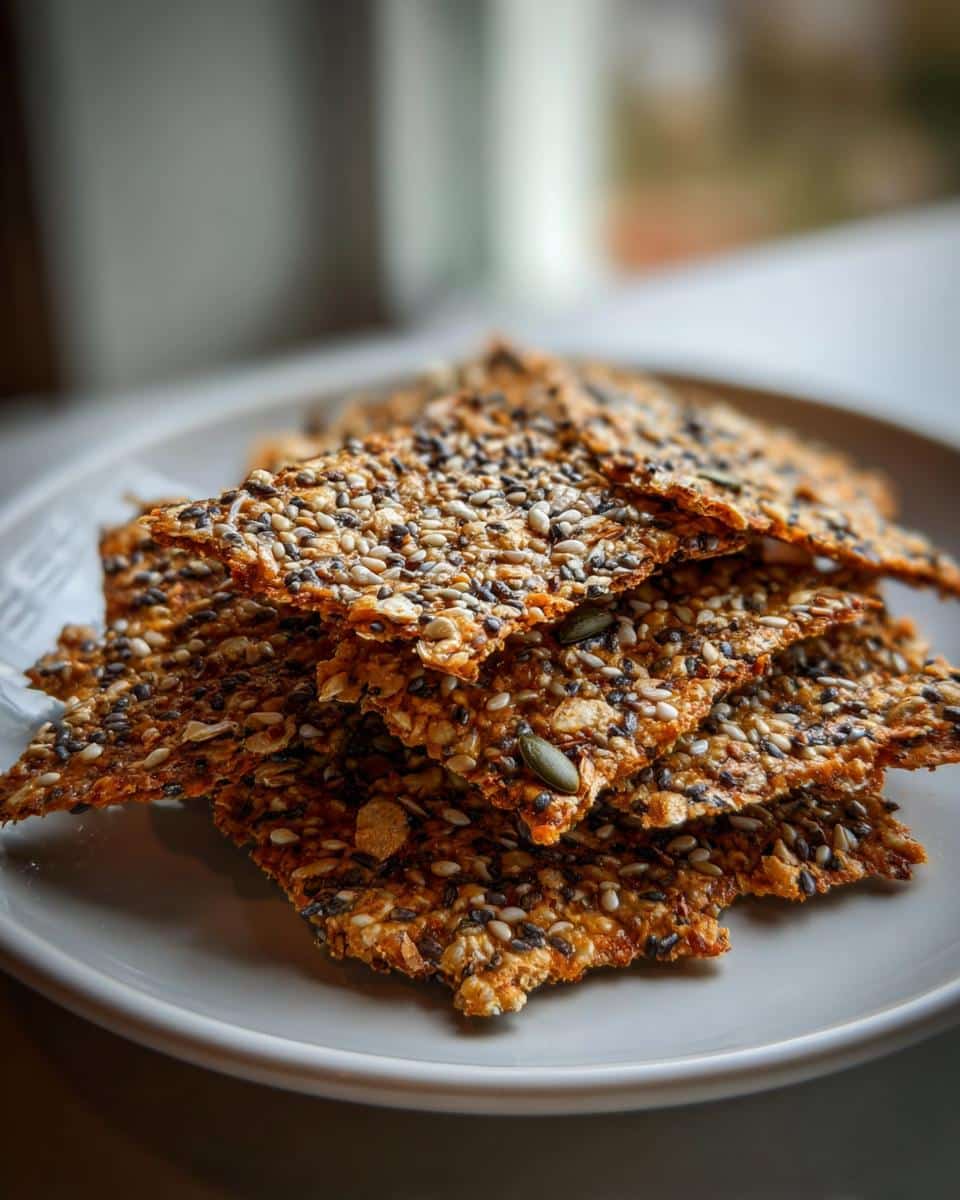
Have you ever wondered why seed crackers fall apart the moment you try to lift them off the baking tray? I certainly have. I remember the first time I tried to make “zero-carb” crackers. I had bought ten dollars’ worth of organic pumpkin seeds, sunflower seeds, and fancy hemp hearts. I mixed them up, threw them on a tray, and baked them until they smelled nutty and delicious. But when I went to lift a cracker, the whole thing disintegrated into a pile of toasted birdseed. I was furious. I didn’t want granola; I wanted a vehicle for my hummus.
That failure sent me into a spiral of research. I realized that the reason why seed crackers fall apart is not because the seeds are wrong, but because we often treat them like flour doughs, which they aren’t. They are an aggregate material—like concrete—and they need the right “cement” and cure time. If you are struggling with crumbly snacks, it’s usually a failure of hydrocolloids (the gel) or hydration. I’ve spent nights testing ratios so you don’t have to sweep your snack off the floor. Let’s fix your next batch.
Table of Contents
Why Seed Crackers Fall Apart Without Binders
The number one reason why seed crackers fall apart is a lack of sufficient binding power. Unlike wheat flour, which develops gluten strands to hold things together, seeds have zero structural integrity on their own. You are essentially trying to glue marbles together. To stop the crumble, you need a binder that forms a strong, flexible gel matrix that wraps around every single seed.
Psyllium and Flax: The Hydrocolloid Heroes
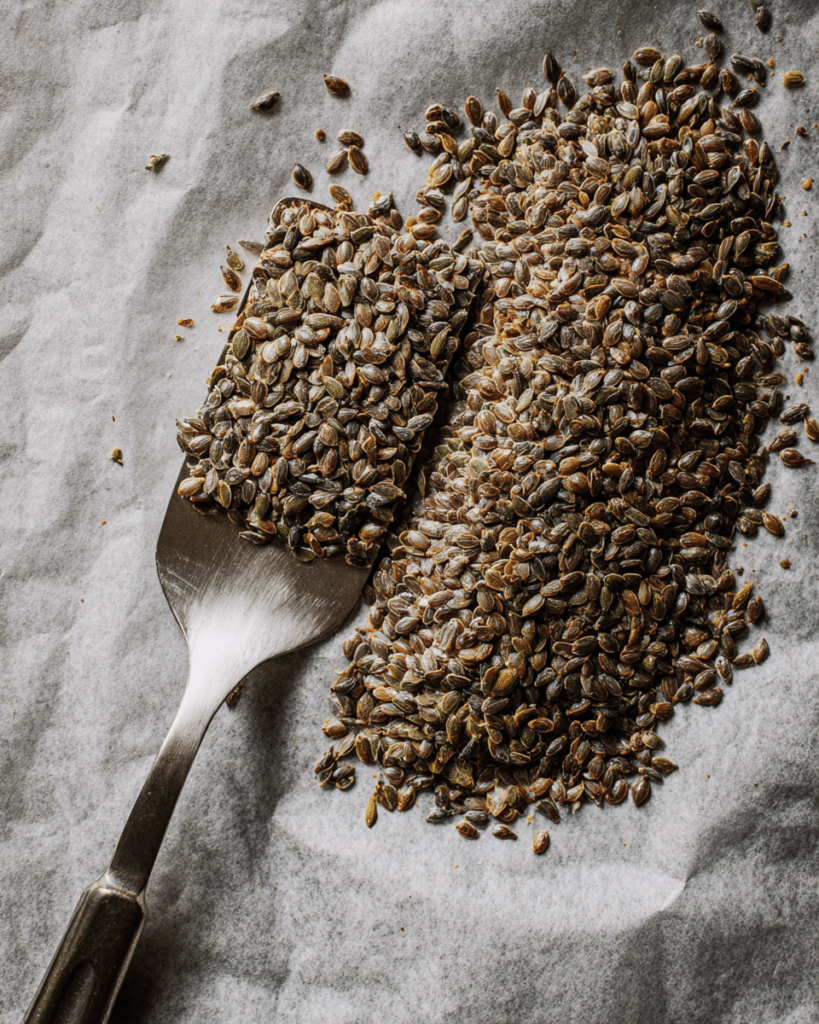
If you are just mixing seeds with water and hoping for the best, you are setting yourself up for failure. You absolutely need a hydrocolloid—a substance that forms a gel when mixed with water. Ground flaxseed (flax meal) and psyllium husk are the gold standards here. Psyllium husk is particularly powerful; it absorbs significantly more water than flax and creates a “mucilage” (a sticky substance) that acts like a superglue. I often see people using whole flaxseeds and wondering why seed crackers fall apart despite the effort. Whole seeds release very little mucilage compared to ground meal. If you want a rock-solid cracker, you must include at least one strong binder like psyllium husk powder. For more crunchy inspiration.
The Water Ratio Balance
Hydration is the catalyst for your binder. If you use too little water, the psyllium or flax won’t fully hydrate, leaving you with dry, powdery pockets. This is a common reason why seed crackers fall apart—the glue never activated. Conversely, too much water dilutes the gel, making the bond too weak to hold the heavy seeds against gravity. The “batter” should feel like a loose, sticky dough—not a soup and not a dry crumble. It needs to be wet enough that you see a visible “slime” connecting the seeds. If you are struggling with ratios, you might find our dehydrated snacks section helpful, as dehydration relies heavily on precise moisture control.
Spreading Mistakes That Cause Cracks
Even with the perfect dough, simple physics can explain why seed crackers fall apart. The way you spread the mixture on the baking sheet dictates the tension within the cracker as it dries. If the structural integrity isn’t uniform, the cracker will snap at its weakest point.
The Danger of “Paper Thin”
We all love a crispy snap, but there is a limit. If you spread the mixture too thin, there isn’t enough overlapping “glue” to hold the heavy seeds together. A single layer of pumpkin seeds has barely enough contact points to stay intact. You want a thickness of about 3–4mm (roughly 1/8 inch). This thickness ensures that the smaller seeds (like sesame or chia) fill the voids between the larger seeds (like pumpkin or sunflower), creating a solid interlocking wall. If you go too thin, you create a “lace” effect where the holes are bigger than the connections, leading to immediate crumbling.
Uneven Edges and The Center Trap
I used to be sloppy with my spreading, leaving the edges thin and the center thick. The result? The edges burned and crumbled before the center was even dry. When the center is still moist and the edges are dry, the tension difference causes the cracker to warp and crack on its own. To prevent this, I use an offset spatula to get a perfectly uniform slab. If you notice the edges browning too fast, the structural stress is already building. Ensuring an even surface is just as critical when making other fragile treats, like our [air fryer crisps], where even heat distribution is key.
The Resting Phase (Time as an Ingredient)
This is the step most impatience cooks skip, and it is a major factor in why seed crackers fall apart. You mix the water and seeds, and you immediately throw it in the oven. Stop! The chemical reaction of hydration is not instant. The binders need time to “bloom” and unfurl their molecular chains.
The 20-Minute Gel Rule
You must let the dough sit on the counter for at least 15 to 20 minutes before you even think about spreading it. During this time, the flax and psyllium absorb the water and swell, transforming from a liquid mixture into a cohesive, gelatinous mass. If you skip this, the water evaporates in the oven before it has a chance to soak into the binders. The result is roasted seeds and loose dust. You know it’s ready when the mixture holds its shape and doesn’t weep liquid.
Troubleshooting the Dough Texture
After the resting period, touch the dough. It should feel tacky and solid. If it’s still runny, add a teaspoon more of husks. If it’s crumbly, add warm water. This “tactile check” is your last line of defense against why seed crackers fall apart. If the raw dough falls apart in your hands, the baked cracker definitely will. It needs to be cohesive enough to be handled almost like a loose bread dough. If you master this texture, you’re ready to tackle more advanced recipes, perhaps even some of our savory oven fried mains.
Baking and Cooling (The Final Fix)
Finally, how you bake and cool the crackers seals their fate. Seed crackers are not baked like cookies; they are essentially dehydrated. The goal is to remove moisture gently without thermal shock.
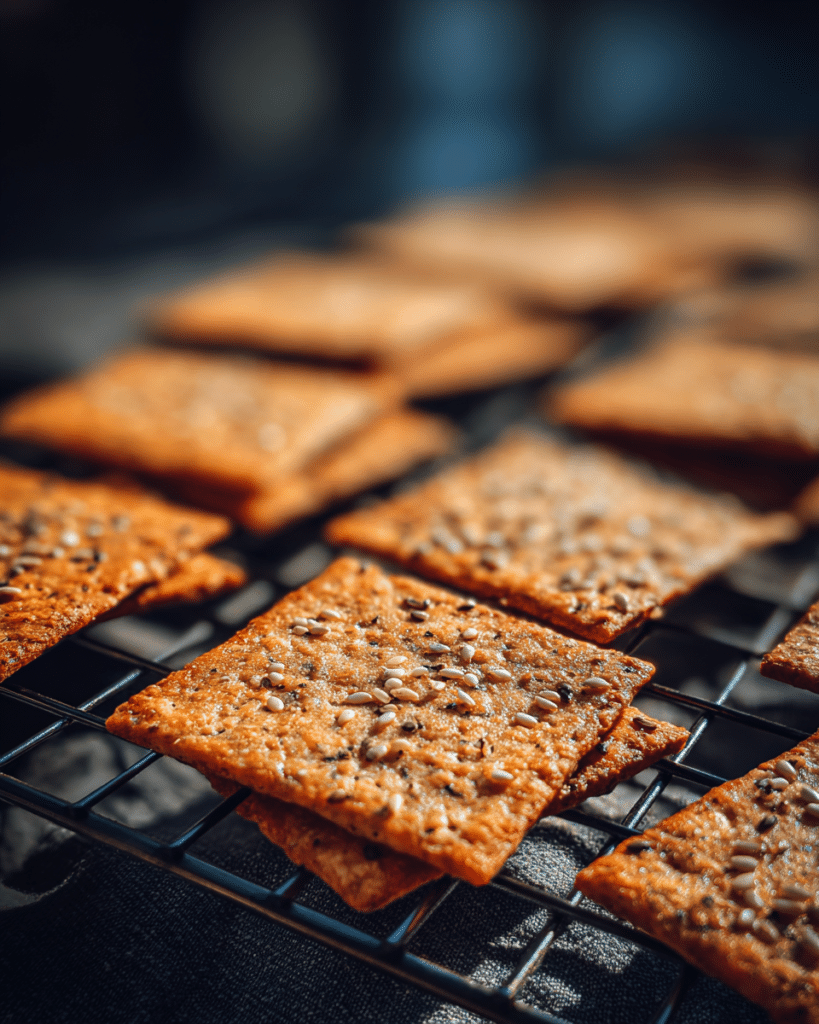
Low and Slow vs. High Heat
High heat (above 350°F/175°C) can cause the water inside the gel to boil and turn into steam too quickly. This steam pressure can blow the seeds apart, breaking the bonds. This rapid expansion is often why seed crackers fall apart even with good ingredients. A lower temperature (around 300°F–325°F) allows the water to evaporate steadily.
The “Cooling Crisis”
Here is the heartbreaking part: you pull the tray out, they look perfect, you try to move one, and it shatters. Seed crackers are fragile when hot. The binders are still pliable. They only harden to their final “glassy” state once they are completely cool. You must let them cool on the pan or carefully slide the entire parchment paper onto a rack. Do not try to break them apart until they are stone cold. For more visual tips on cooling and storage, you can visit our Pinterest where we share daily kitchen hacks.
FAQ
Why do my seed crackers crumble when I cut them?
If you wait until they are fully baked to cut them, they will shatter. Bake them for 20–30 minutes until semi-set, then score them with a knife.
Can I replace psyllium husk with eggs?
Yes, but the texture changes to a more “cookie-like” crunch. If you use eggs, lower the water content significantly.
My crackers are chewy, not crispy. What happened?
They likely retained moisture due to high heat or thickness. Rescue them by baking at a very low temp (200°F) for 30 minutes.
Can I use chia seeds instead of flax?
Yes, chia seeds are excellent binders because they form a very strong gel. Ground chia seeds work even better for a smooth binding matrix.
Conclusion
Understanding why seed crackers fall apart is the first step to mastering them. It’s not about luck; it’s about respecting the chemistry of the ingredients. Once you understand that the gel is your glue, the resting time is your curing period, and the low heat is your friend, you’ll stop baking birdseed and start baking sturdy, scoop-worthy crackers. It takes a little patience to get that perfect snap, but the first time you dip a homemade cracker into guacamole and it doesn’t break? Pure victory.